

























James Kelly for Closets by Design
American wardrobes have exploded.
According to research by the United States Public Interest Research Group (PIRG), the average American now buys about 53 new garments a year. That means we're purchasing four times more clothing than we did in the year 2000.
Sadly, a lot of that has no place to go at home, and it ends up getting tossed. The Environmental Protection Agency counts 17 million tons of textile waste in a single year. That's up more than 800% since 1960.
The part that makes organizers wince? A big share of what gets tossed isn't worn out. It's ruined in storage, and an overstuffed closet is where it starts. There is a simple test, says Mindy Godding, co-owner of Abundance Organizing, in a rundown of common closet storage mistakes. "If you can slide the hangers back and forth with ease, you're good, but if you have to get in there and shove the neck of the hanger over, it's a good indication that it's overstuffed." Her target: "A quarter of an inch of space on each side is best."
That waste costs real money. The Council for Textile Recycling estimates the average American discards about 70 pounds of clothing and textiles a year.
Closets by Design, a custom closets and storage company with locations across the U.S. and Canada, reports that how clothing is stored can play a role in how well it holds up over time. Organizers say a meaningful share is damage, not wear: moth holes, mildew, sun fading, and garments stretched or crushed between seasons.
The insects that do the worst of it are picky. Moths "generally attack wool and hair fibers such as mohair, cashmere, angora, camel, reindeer," writes Linda Heaton, professor of textiles and environment at the University of Kentucky, in that state's clothing storage guide. And they are drawn to what is on a garment as much as the garment itself. "You'll want to wash or dry clean all your items before storing them away, as dirt makes your clothes more attractive to pests," says textile conservator Camille Myers Breeze of Museum Textile Services, in an explainer on clothes moths.
The challenge looks different on different weather maps. In four-season states, a whole winter of coats and boots need a home from April to October.
Di Ter Avest, a professional organizer, gives advice on the essential seasonal swap. "Take out everything that's clearly summer-only, like swimsuits, tank tops, or sandals, and store them in bins or storage bags. This instantly creates space and makes it easier to see your fall pieces."
In warm-weather states, the rotation is smaller but real, built around travel wardrobes, holiday outfits, and the occasional cold snap. Either way, the goal is the same: Get clothes out of daily space without letting storage become the place where they are forgotten.
How to store clothes without damaging them
What actually protects clothes? Rigid bins beat cardboard, which invites pests and moisture. Linda Heaton, professor of textiles and environment at the University of Kentucky, writes in that state's clothing storage guide, "Corrugated plastic boxes that are lightweight, sturdy, waterproof and vented are good for storage." Clear containers let you see what's inside. Opaque ones protect against light in bright spaces.
Professional organizer Heather Aiello agrees. "Cardboard attracts moisture and pests that can ruin fabrics, causing mold, mildew or even holes," she tells Reader's Digest.
And skip the vacuum bags for anything long-term. Compressed fibers can't breathe, and they come out with deep wrinkles and warped shapes. "The bags shrink up to really odd shapes," says Megan Duesterhaus, Organization Expert at The Homes I Have Made. "They are in no way flat, stackable, or uniform. Rather, they become a firm, inflexible, misshapen blob that can be difficult to store."
The goal is breathable, not sealed. "You don't want to seal it in a plastic bag, you want to let it breathe," says Ann Sullivan, founder of Ann Sullivan Organizing in New York City, in that same closet storage rundown.
The Smithsonian's Division of Textiles recommends garments be wrapped in "clean, white cotton cloth, such as an old sheet or pillowcase, or in muslin" and, if plastic is used at all, only "loosely encased in an unsealed plastic wrapping." For pieces that keep their shape on a hanger, breathable cotton garment bags beat plastic dry-cleaning film, which traps moisture against the fabric.
"Throw away those thin, plastic garment bags that the dry cleaner gives you," warns professional organizer Allyson Cartwright in a list of things to toss right away. "I know these give the perception of your clothes being protected from the elements in your closet, but they can actually trap some harmful gas that can cause discoloration in your clothes."
Museum conservators put it plainly. "Do not store textiles in plastic dry-cleaning bags or plastic tote boxes as these contain plasticizers that can harm fibers and even change colors of dyes," advises the North Carolina Museum of History.
Location matters most of all. Attics, garages, and basements without humidity control are among the riskiest places in a house for stored fabric. The Library of Congress has some blunt advice on the matter: "Do not store objects of value in the basement, attic, or garage. These areas are unsuitable for safely storing collections because of poor temperature and relative humidity control and higher risk of leaks and floods."
Also, be aware that a good bin does not fix a bad room. In that same guidance, the Library of Congress also notes that plastic bins "do not offer protection against the deteriorating effects of environmental extremes found in basements/attics/garages."
Prep counts as much as the container. "Properly clean garments (launder or dryclean) prior to storage, checking carefully for any unnoticed spots or stains," Heaton writes, because body oils and food residue set into stains and attract pests. Do a quick repair pass while loose buttons and split seams are still small jobs. Label bins by season and category. For wool, Heaton recommends a cedar enclosure "constructed of heartwood at least 3/4 inch thick," though she is clear that hardware is not the main event: "The most reasonable approach to preventing insect damage is storing items clean, and in a well-ventilated, clean storage area."
The other half of the fix is subtraction. "Declutter as you swap it out," says Tracy McCubbin, founder and CEO of the organizing firm dClutterfly in the same seasonal swap guide. "Till I'm blue in the face, if you didn't wear it last winter, you're not going to wear it this year."
Ben Soreff of House to Home Organizing suggests a gentler way in. "Instead of being negative and saying I haven't worn it in a year or I don't need it, focus on why you haven't worn it." The seasonal changeover is the natural moment to act on it.
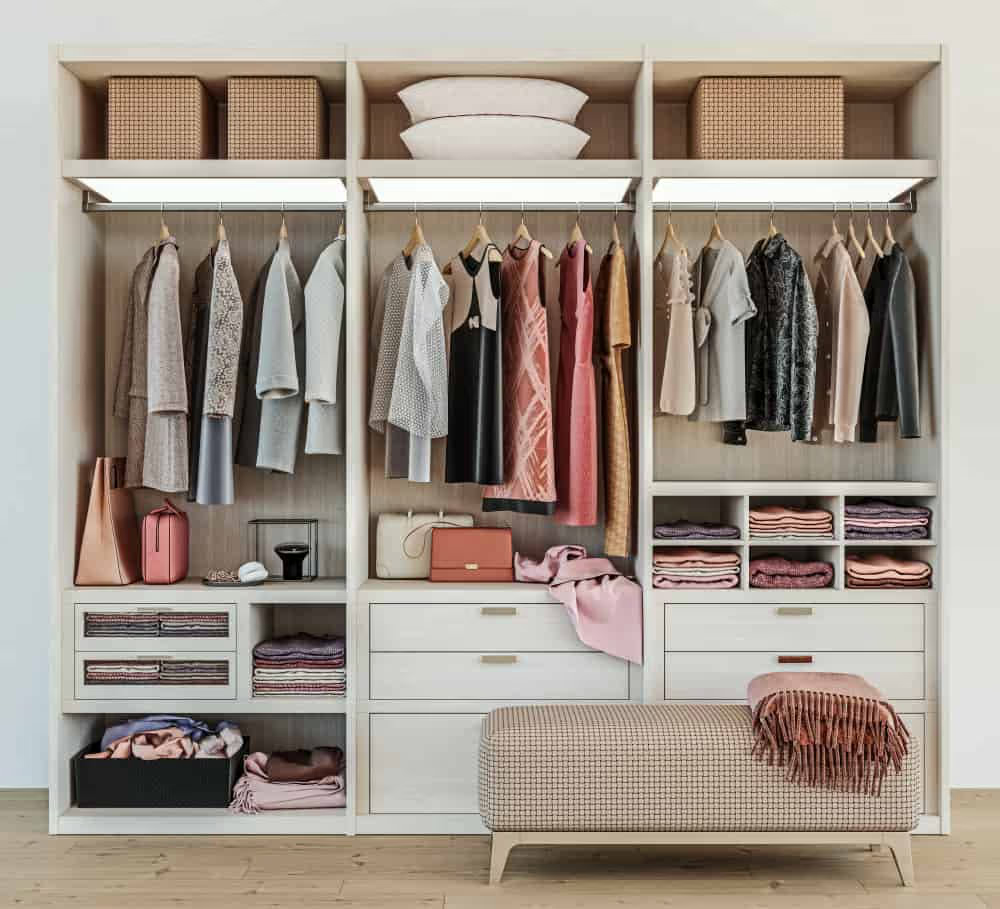
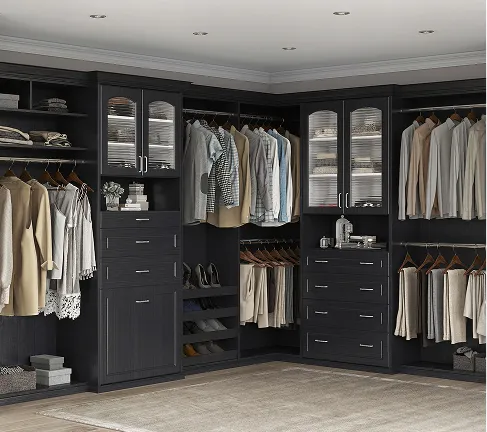
Closets aren't getting bigger. But designed well, they don't need to. The right custom layout can keep the clothes you wear the most within reach and everything else protected until it's back in season.
This story was produced by Closets by Design and reviewed and distributed by Stacker.