















James Kelly for Closets by Design
School mornings can be a hectic time, with children getting dressed, gathering their belongings and preparing to leave the house on a tight schedule. Misplaced shoes, missing homework and last-minute searches for backpack belongings can add to the stress.
School mornings are “kind of like a perfect storm,” David Anderson, PhD, a clinical psychologist at the Child Mind Institute, said in an article published by the institute. “You have a number of things that have to get done,” he said, “and there’s also a time limit.”
Key Takeaways
- K-12 families planned to spend a record $43.3 billion on school gear this year.
- Hooks for children should be between 36 and 44 inches, depending on age.
- A backpack should weigh no more than 10% to 15% of a child’s body weight.
- About 35% of Americans say a lost item has made them late for work or school.
- School papers need one daily landing spot and a weekly sort.
What does the school year bring into the house?
Families with children in elementary through high school planned to spend an average of $863.86 getting ready for this school year, according to the National Retail Federation’s 2026 survey, a record $43.3 billion in total. In the survey’s category breakdown, Closets by Design found the money split four ways: electronics ($293.11 per family), clothing and accessories ($250.29), shoes ($174.01) and school supplies ($146.45).
Sports add another load. A record 8.26 million students played high school sports in 2024-25, according to the National Federation of State High School Associations, and 65% of children ages six to 17 played a sport at least once in 2024, according to the Aspen Institute’s Project Play. All of it competes for the same few square feet by the door each morning.
How high should hooks be for kids?
Federal accessibility guidance gives the clearest numbers. The 2010 ADA Standards for Accessible Design include advisory reach ranges for places where “coat hooks, lockers, or operable parts are designed for use primarily by children”:
Ages 3 and 4: no higher than 36 inches and no lower than 20 inches
Ages 5 through 8: no higher than 40 inches and no lower than 18 inches
Ages 9 through 12: no higher than 44 inches and no lower than 16 inches
Over 12: the adult range, 15 to 48 inches
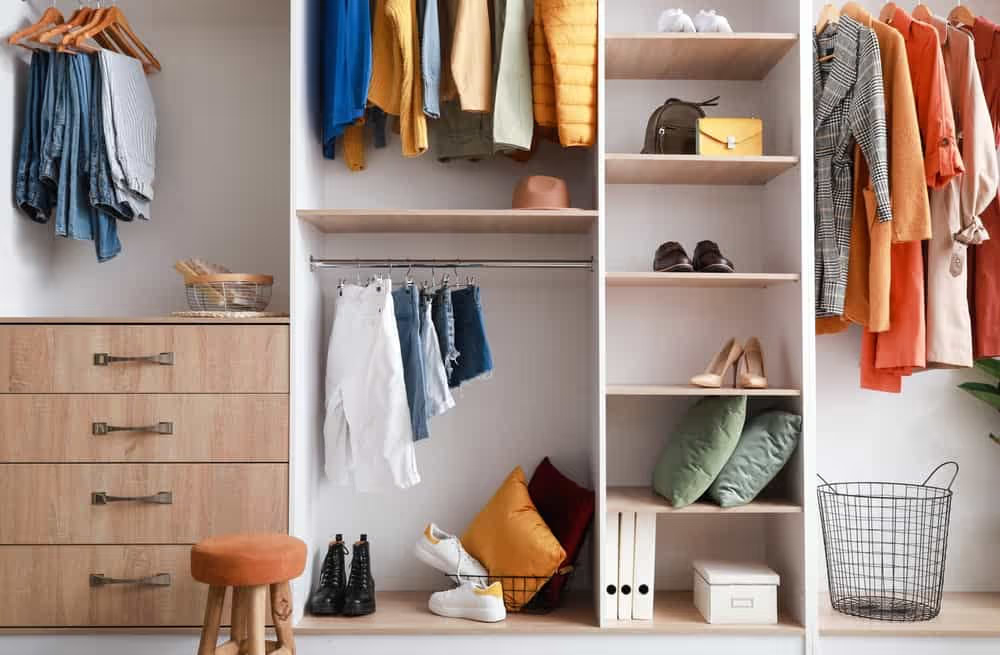
A hook near the top of a child’s range keeps a backpack off the floor and within reach. An adjustable rail or a second row of hooks lets the setup change as children grow.
“The ultimate aim is to create a bedroom that a child can manage themselves. Hooks they can reach, drawers they can open, clearly labelled storage and a simple place for school belongings encourage independence,” Katie Malik, an interior designer, told Homebuilding & Renovating.
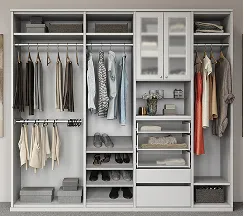
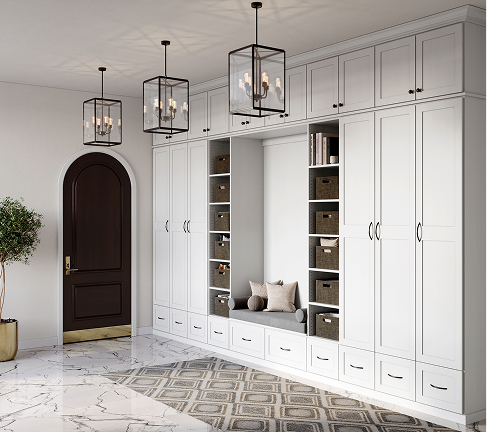
In closets, Bob Vila recommends a lower rod 30 inches off the floor for children, and shelves typically run 12 inches deep for folded clothes, according to This Old House. Mudroom lockers are typically 10 to 18 inches deep and at least 18 inches wide, according to Angi, and fabric bins for common 11-inch cube shelving measure about 11 by 10.5 by 10.5 inches, according to retailer specifications.
How heavy should a backpack be?
The American Physical Therapy Association recommends keeping a loaded backpack at 10% or less of a child’s weight, about five pounds for a 50-pound first grader. The American Academy of Pediatrics puts the ceiling at 15%.
The limits exist for a reason. “When backpacks are heavy or worn incorrectly, the wearer can develop repetitive injury, strain or acute injury, which over time may cause pain and discomfort in the neck, back and/or shoulder region,” Dr. Aki S. Puryear, a professor of clinical orthopedic surgery at the Indiana University School of Medicine, said in a university Q&A.
“Backpacks appear to be the ‘life support system’ for most students,” Dr. Karen Jacobs, an occupational therapist and clinical professor at Boston University, said in an American Occupational Therapy Association release.
The APTA and AAP both recommend wearing both straps, and the AAP advises cleaning out the backpack weekly. A drop zone with set places for library books and sports clothes lets the bag be emptied each afternoon and repacked with only what the next day needs.
Where does the time go on a school morning?
In a 2023 Shane Co. survey of more than 2,000 people, about 35% of Americans said a lost item had made them late for work or school.
A one-week time audit shows where a household’s minutes go:
- Note when the first person wakes up and when the last person leaves.
- Write down every item someone has to search for, and for how long.
- Give each searched-for item a fixed home near where it is used.
“Every person in a household needs a drop station, frankly, but it’s especially helpful for kids,” Danica Carson, a professional organizer and co-founder of The Uncluttered Life, told Parade. “Creating a drop station will also create the habit of putting things in the same place. This eliminates the last-minute panic of frantically searching the house.”
Packing the night before closes the gap. “Get everything set up before they go to bed. For older kids, that usually means making sure they plug in their computers if they have to take them to school daily,” pediatrician Cindy Gellner, MD, writes for University of Utah Health.
What should happen to permission slips and artwork?
Paper comes home in waves, and few families have a rule for what stays.
“Paper is the root of a lot of visual clutter,” Lenora O’Keith, a professional organizer and owner of Aronel Home, told Parade. “I recommend having a drop zone for all papers somewhere convenient that everyone in the home can use, then making it a daily habit to spend 5-10 minutes sorting through for anything important.”
Guidance from Washington Family Magazine suggests sorting papers at least weekly. A four-part rule keeps each decision quick:
Act: Permission slips and forms get signed the same night and go back in the backpack.
Keep: School calendars, directories and spelling lists go in one file, sorted by type.
Scan: Artwork worth remembering but not storing gets photographed, then recycled.
Toss: Routine worksheets go once a parent has seen them.
For pieces that make the cut, organizers often recommend one memorabilia box per child, reviewed once or twice a year, according to Popular Science.
“A keepsake box causes you to constantly purge and evaluate what you really want to keep,” Stephanie Davis, a certified professional organizer with Let’s Get Organized, told Washington Family Magazine. “The keepsake boxes should be stored where they are easy to get to.”
How do storage needs change from elementary to high school?
Elementary school: hooks at 36 to 40 inches, a lower closet rod about 30 inches off the floor and a parent-managed paper tray, emptied daily
Middle school: hooks raised toward 44 inches, then to adult height after age 12, a charging spot near the drop zone for school devices and a family calendar everyone can see
High school: adult-height hooks, a full-height closet rod, a separate spot for sports bags and student-managed paperwork and deadlines
“Kids thrive on routine,” Amanda Titchenal, founder of the organizing firm Well Organized, told Sunset. “Prep is always key.”
The test of a school-morning setup is whether the household gets out the door on a weekday without anyone asking where something is. That depends less on how much storage a home has than on whether everything that travels to school has a place to land.
This story was produced by Closets by Design and reviewed and distributed by Stacker.