
























How do you transition a wardrobe between seasons?
Transition a wardrobe between seasons in three passes: edit, store and stage. Edit the outgoing season down to what you actually wore; clean those garments and store them in lidded bins or garment bags in a climate-controlled space; then stage the incoming season at eye level, with hanging sections and drawers arranged by how you dress.
Where the seasons are distinct, wool and down give way to linen and cotton, and back again, and a closet that holds all of it at once holds none of it well. This guide covers the seasonal switch itself. For the bigger picture on how much clothing Americans own and how they store it, see the Closets by Design report on how many clothes Americans own.
A four-season rotation
A four-season rotation moves clothing forward and back twice or four times a year, depending on how distinct the seasons are where you live. The table shows what moves, where the incoming pieces go and where the outgoing pieces are stored. It doesn't fix dates, because the seasons don't arrive on the same calendar everywhere.
| Season arriving | What moves forward | Where the incoming pieces go | What moves back | Where the outgoing pieces live |
|---|---|---|---|---|
| Spring | Lightweight layers, rain shells, transitional knits, loafers | Eye-level shelves and short-hang for layers and knits; rain shells by the door or in the mudroom; loafers on open shoe shelves | Heavy coats, wool suits, boots, thermal layers | Garment bags on the long-hang rod; lidded bins on top shelves; cleaned boots in the mudroom or under short-hang |
| Summer | Linen, cotton, sandals, swimwear, light dresses | Short-hang and long-hang for linen and dresses; swimwear in easy-reach drawers; sandals on open shoe shelves | Mid-weight knits, trench coats, closed shoes | Lidded bins on upper shelves; a guest-room or laundry-room closet for overflow |
| Autumn | Mid-weight knits, denim, jackets, boots | Knits and denim on eye-level shelves or in drawers; jackets on short-hang; boots on shoe shelves or in the mudroom | Linen, swimwear, sandals, light dresses | Breathable bins on top shelves; garment bags for linen suits and dresses |
| Winter | Wool, cashmere, heavy outerwear, boots, scarves and gloves | Knits in specialty drawers; heavy outerwear on long-hang or in the mudroom; scarves and gloves in divided drawers or baskets | Light layers, rain shells, open shoes | Specialty drawers and lidded bins; outerwear and salt-exposed boots zoned in the mudroom |
Edit: decide what goes into storage
Start the switch by editing the outgoing season before anything goes into a bin. Take out each piece and sort it into three groups: store, clean or repair first, and let go. If something went unworn all season, the changeover is the natural moment to decide whether it earns a place for another year.
Check each piece you keep for stains, loose seams and small holes, and deal with them before storage. Soiled fabric is where clothes moths do the most damage, and a smaller off-season collection needs less storage space.
Store: how to store seasonal clothes
To store seasonal clothes, clean everything and make sure it is completely dry, then match the storage to the garment: lidded bins for folded pieces, breathable garment bags for structured pieces and loose hanging space for down and insulated outerwear. Keep it all in a climate-controlled space rather than a basement, attic or garage.
Match the storage to the garment
Folded, structured and insulated pieces each need different storage, and the container you choose also decides where the piece sits in the closet.
| What you're storing | How to store it | Where it goes in the closet |
|---|---|---|
| Folded knits, sweaters and off-season layers | Lidded bins, packed loosely. Fabric bins let air move; plastic bins with tight-fitting lids keep insects out more reliably | Top shelves or the floor beneath short-hang sections |
| Suits, coats, dresses and linen pieces | Breathable garment bags on sturdy hangers, with space between them | The long-hang rod in the off-season zone |
| Down and insulated outerwear | Hung loosely or in a large breathable bag, not compressed for months | A long-hang section with room around each piece |
| Delicates, scarves, gloves and hats | Specialty drawers, or small lidded bins with dividers | Drawers inside the closet system |
| Boots and seasonal shoes | Cleaned and fully dry, on shelves or in lidded bins | Upper or lower shoe shelves; wet or salt-exposed boots dry in the mudroom first |
Protect wool and cashmere from moths
Wool, cashmere and other animal fibers are what clothes moths feed on. Clean them before they go into storage, since moths do the most damage on fabric soiled with perspiration or food, and store them in containers with tight-fitting lids or closed garment bags rather than on open shelves. Check stored wool at least once a year. Cedar is often recommended, but entomologists describe its effect as limited and say it fades as the wood ages, so it is no substitute for clean garments and good containers.
What to avoid
A few common storage choices work against the clothes they hold:
- Cardboard boxes. They give silverfish and other pests a place to hide; lidded plastic bins are the better choice.
- Long-term compression. Vacuum-sealed bags save space, but down kept compressed for months loses loft, so store it loosely.
- Packing damp or overfilling. Garments that go into storage damp can mildew, and tightly packed bins crease fabric and stop air from moving.
- Basements, attics and garages. These spaces are more likely to be damp or to swing between hot and cold. If the main closet is full, a laundry room or guest room closet is better overflow.
Stage: set up the incoming season
Staging puts the current season where you reach first. The season you are living in should never be behind the season you are not. Pull-out drawers bring folded knits forward, clear bins show what is inside without lifting a lid, and hanging sections arranged by garment type (long-hang, short-hang, outerwear) mean the morning decision is made by looking rather than searching.
Put the pieces you wear most at eye level, group hanging items by type and then by color, and label every stored bin with its contents so the next switch starts with a list rather than a search. The off-season belongs above or below the eye line, labeled, and nowhere else.
Storing by climate: humid South, cold North
Seasonal storage follows the climate. In humid climates, the priority is keeping stored clothes dry; in cold, snowy climates, it is keeping wet, salt-exposed gear away from the wardrobe. In milder climates the switch is smaller, but the same edit, store and stage steps apply.
In humid climates such as Atlanta's, moisture is the main risk. Make sure every piece is completely dry before it goes into a bin or garment bag, leave space between garments so air can move, and keep storage slightly away from walls, where condensation can form. The U.S. Environmental Protection Agency recommends keeping indoor humidity below 60 percent to limit mold.
In cold, snowy climates such as Chicago's, the problem is what the winter brings in: road salt on boots, melting snow on coats, wet gloves and scarves. That gear needs its own zone, usually a mudroom with coat hooks, a bench and easy-to-clean cubbies for all-weather gear, so it dries and is brushed clean before it goes anywhere near the wardrobe.
Designing a closet for four seasons
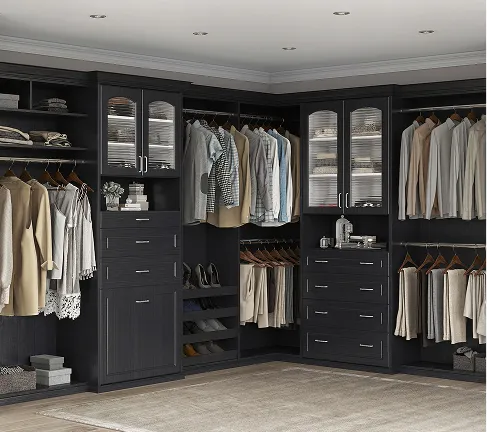
A closet designed for four seasons gives the off-season a permanent, protected home within the system, so the rotation is a matter of moving pieces between zones rather than between rooms. In practice, that comes down to a few features:
- A dedicated off-season zone. One section of the system, usually the highest or least-reached, is set aside for whichever season is resting, so stored pieces always go back to the same place.
- Upper shelving. Custom shelves above the hanging sections hold labeled bins of folded off-season pieces, out of the way but within reach of a step stool.
- Double-hang sections. Two stacked rods add a second row of short-hang. The upper rod can hold off-season pieces while the lower rod holds what you wear now.
- Drawers. Specialty drawers keep knits, delicates, scarves and gloves folded and easy to see, and their contents change with the season while the drawer stays put.
- Accessory zones. Organization dividers, baskets, belt racks and jewelry trays give each accessory a fixed place, so cold-weather accessories can be swapped out as a set.
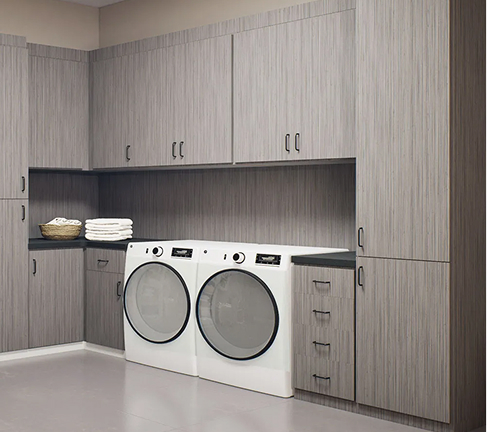
- A mudroom connection. Wet coats, boots and salt-exposed gear belong in a mudroom or entry zone rather than the bedroom closet, so the closet holds only clean, dry clothing.
Walk-in and reach-in closets handle rotation differently. A walk-in closet usually has room for both seasons, so rotation means moving pieces between zones in the same space: a dedicated run of custom shelves and specialty drawers above the hanging sections for the dormant season, with lighting so nothing is forgotten in a dim corner. A reach-in closet has less room, so it relies on height: double-hang below, deep shelves above, pull-out baskets at the floor, and often an overflow closet elsewhere in the house for the bulkiest off-season pieces.
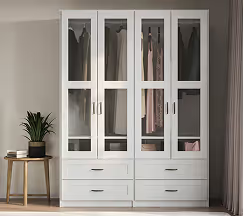
Across both, the closet accessories that make rotation easiest are specialty drawers for knits, dividers that keep stacks upright, custom hampers for the pieces headed to the cleaner, and decorative doors and drawers that keep dust off whatever is resting. For a bedroom without a closet at all, a wardrobe closet brings the same system into the room as a piece of furniture.
Finish matters too. A closet you enjoy opening is a closet you keep. Finishes that match the bedroom, hardware with weight, lighting that shows color accurately and details such as decorative drawer fronts make the seasonal switch feel less like a chore, and that is what makes the system last.
Frequently Asked Questions
When should you switch your wardrobe for the season?
Switch when the weather changes where you live rather than on a fixed date. In four-season markets that typically means two major changeovers, with smaller adjustments in between, and the closet should be designed so each one takes little effort.
How often should you rotate seasonal clothes?
Two to four times a year, depending on how distinct your seasons are. In a four-season climate, two major rotations in spring and autumn usually cover it, with smaller swaps of layers and accessories in between. Where the seasons are milder, one main rotation may be enough.
What clothes should be stored for the off-season?
Anything you won't wear until the weather turns again. In spring, that means heavy coats, wool suits, boots and thermal layers; in autumn, linen, swimwear, sandals and light dresses. Keep a few transitional pieces, such as a light jacket and mid-weight knits, within reach all year.
What is the best way to store out-of-season clothes?
Clean everything and make sure it is completely dry, then store folded pieces in lidded bins and structured pieces in breathable garment bags in a climate-controlled space. Use top shelves and the floor beneath short-hang sections, pack garments loosely and avoid keeping down compressed in vacuum-sealed bags for months.
Where should off-season clothes go in a closet?
In the parts of the closet you reach least: upper shelves, the floor beneath short-hang sections, the upper rod of a double-hang section or a dedicated off-season zone. Keep them in labeled bins or garment bags so you can find a piece without unpacking everything, and leave the eye-level space for the season you are wearing.
Can you store seasonal clothes in a basement or garage?
It's best not to. Basements, attics and garages are more likely to be damp or to swing between hot and cold, and damp storage leads to mildew. If the main closet is full, use a laundry room or guest room closet as overflow instead.
How do you keep moths away from wool and cashmere?
Clean garments before storing them, since clothes moths do the most damage on fabric soiled with perspiration or food, and keep them in containers with tight-fitting lids or closed garment bags rather than on open shelves. Check stored wool at least once a year. Cedar is a traditional option, but its effect is limited and fades as the wood ages, so it shouldn't replace cleaning and good containers.
How do you organize a closet for all four seasons?
Give each season a zone. Keep the current season at eye level in the main hanging sections and drawers, put the off-season on upper shelves, in labeled bins or in a dedicated off-season section, and keep wet outerwear in a mudroom. Each switch then means moving pieces between zones rather than between rooms.
Design a closet that makes the seasons easy
If the twice-yearly switch feels like moving house, the closet is the problem rather than the wardrobe. Book a complimentary in-home design consultation and a local Closets by Design designer will plan a four-season system around the way you dress.